Lean Into Frog Stand
The Lean Into Frog Stand is a foundational balance and pressing drill in calisthenics that teaches you to shift bodyweight onto your hands while stabilizing through the shoulders, core, and wrists. It primarily loads the front deltoids and triceps as you lean forward into a supported position, with the core working constantly to maintain balance. Mastering this movement builds the wrist conditioning, shoulder stability, and forward lean confidence required for crow pose, planche progressions, and freestanding handstand entries.
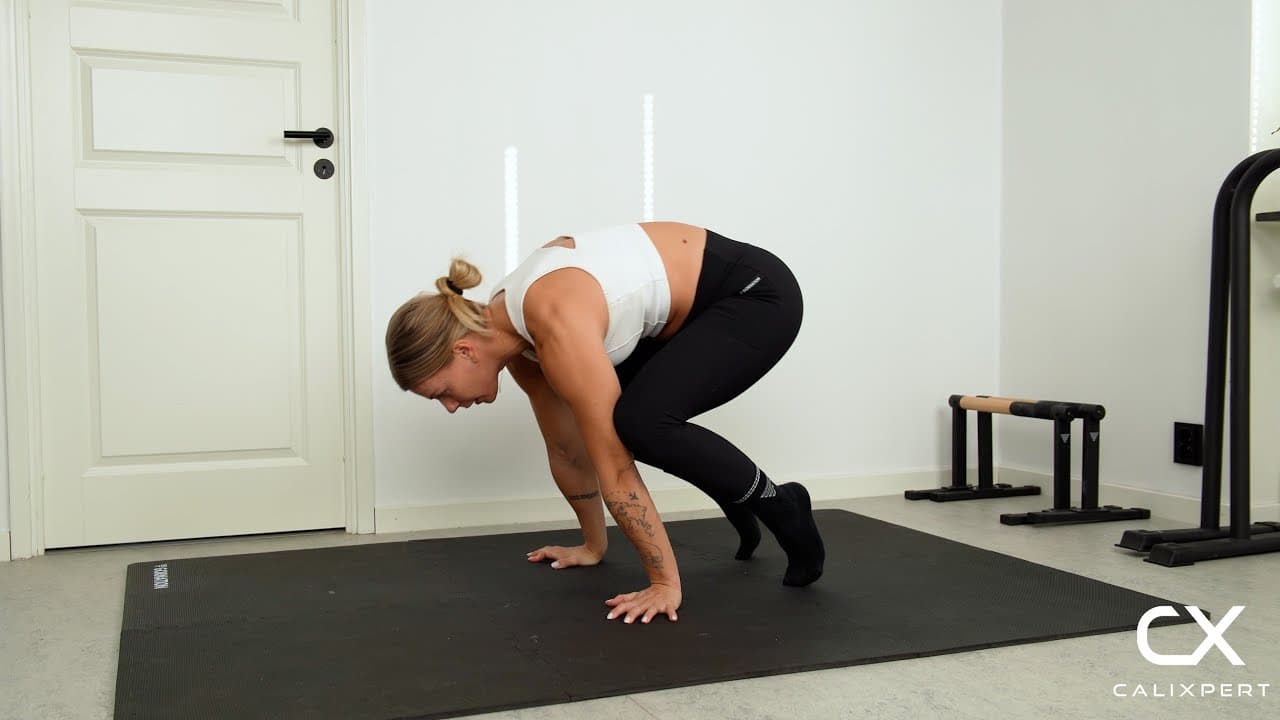
The Lean Into Frog Stand is a foundational balance and pressing drill in calisthenics that teaches you to shift bodyweight onto your hands while stabilizing through the shoulders, core, and wrists. It primarily loads the front deltoids and triceps as you lean forward into a supported position, with the core working constantly to maintain balance. Mastering this movement builds the wrist conditioning, shoulder stability, and forward lean confidence required for crow pose, planche progressions, and freestanding handstand entries.
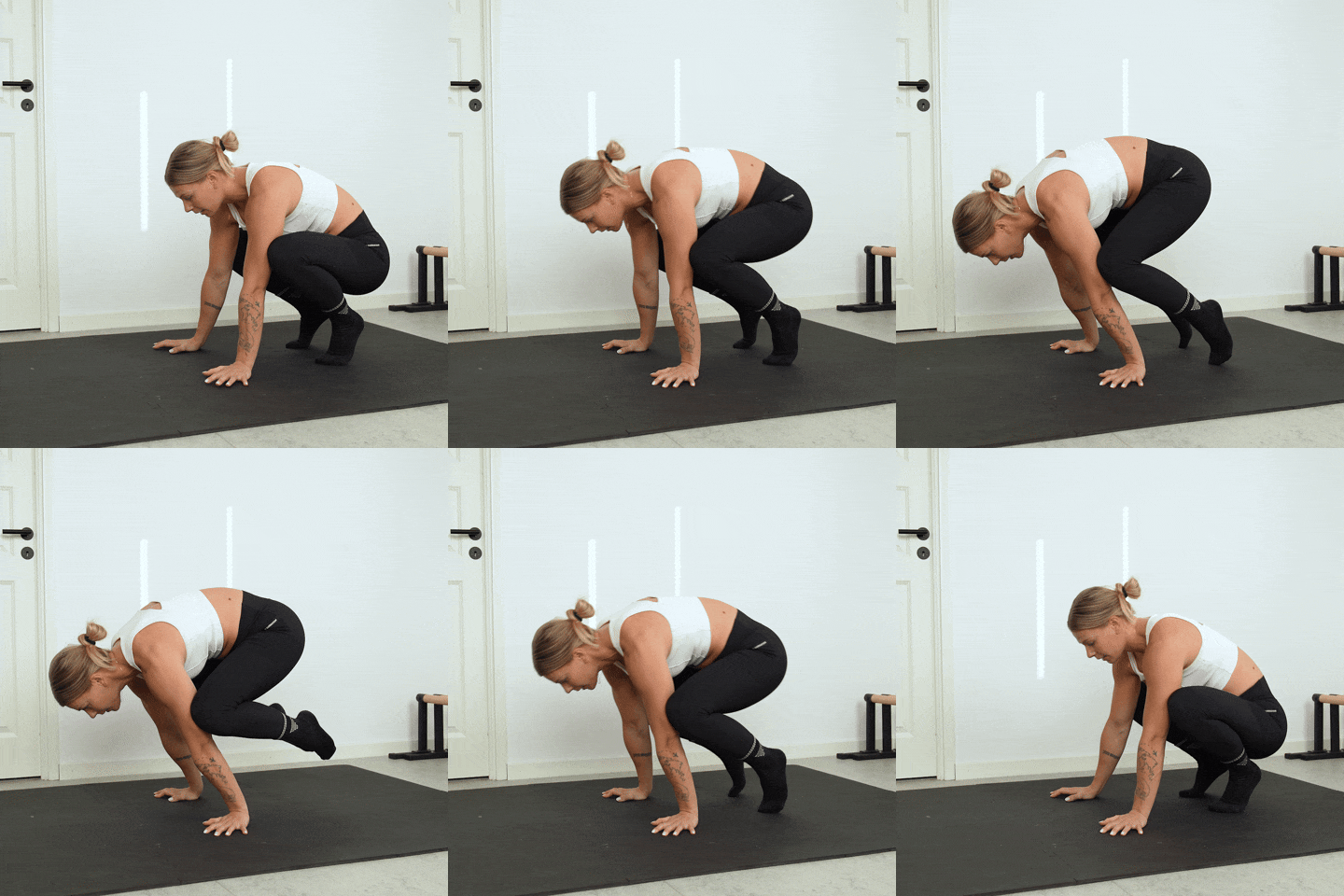
How to Do Lean Into Frog Stand
1. Place Your Hands on the Floor
Squat down and place both hands flat on the floor roughly shoulder width apart or slightly wider. Spread your fingers wide to create the largest possible base of support. Your palms should be fully in contact with the floor, with your weight distributed evenly across the heel of the hand and the fingertips.
Fingers spread wide, full palm contact
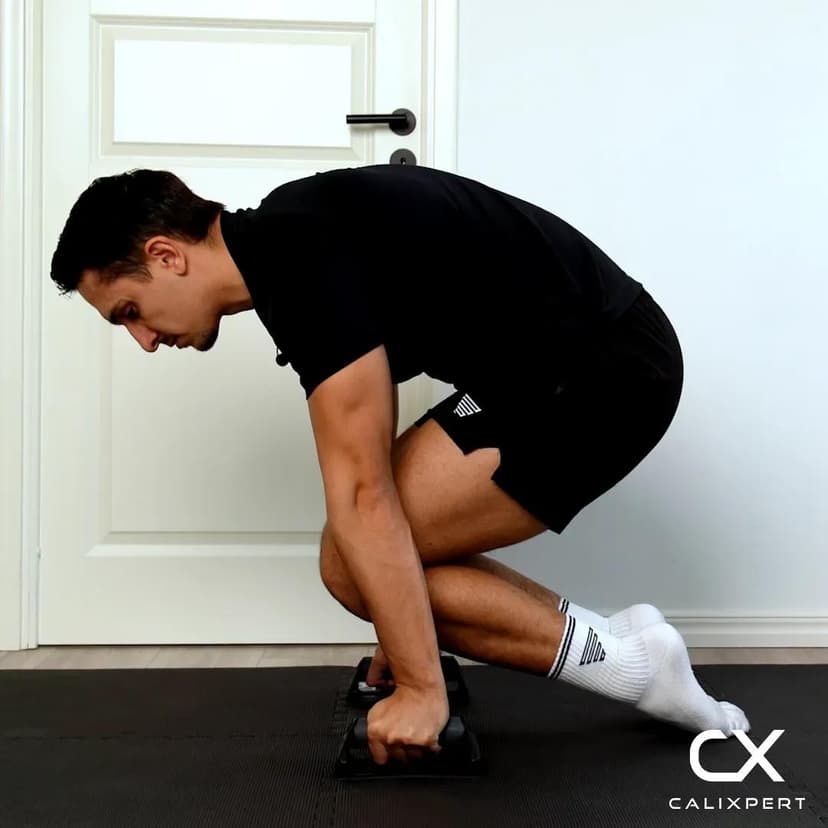
2. Position Your Knees on Your Arms
Place your knees on the outside of your upper arms, just above the elbows. Your shins should rest against the backs of your triceps, creating a shelf that supports your lower body. Make sure the contact point is firm and stable before moving to the next step.
Knees outside, tight against the arms
3. Raise Your Hips and Set Your Core
Lift your hips upward from the squat so your weight begins to shift forward onto your hands. Engage your core by pulling your navel toward your spine. This hip lift is what starts loading the shoulders and prepares you for the forward lean.
Hips up, core tight before leaning
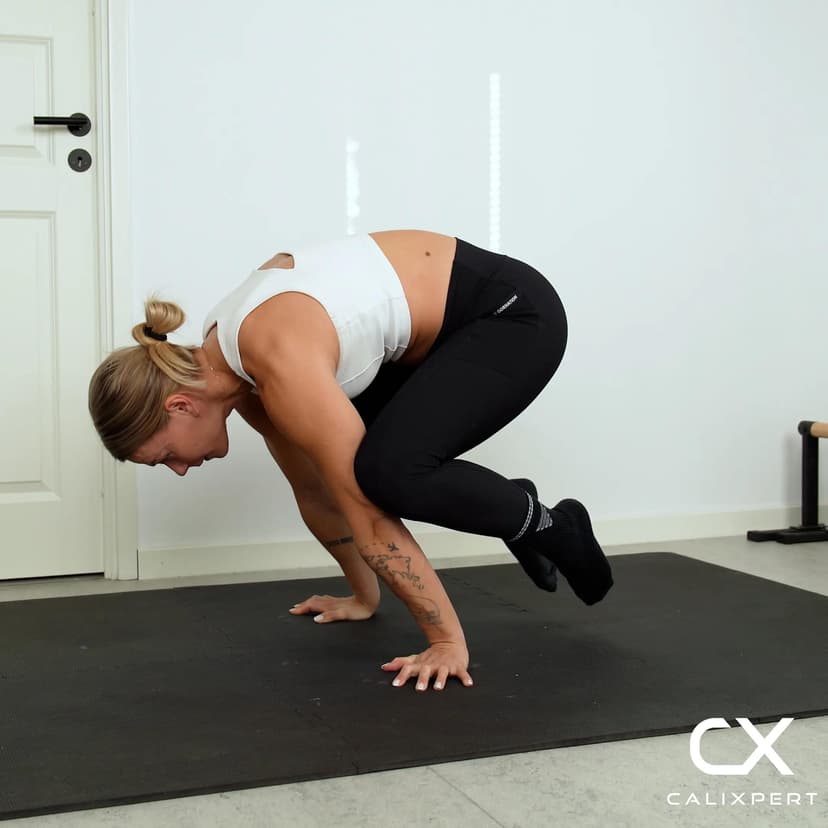
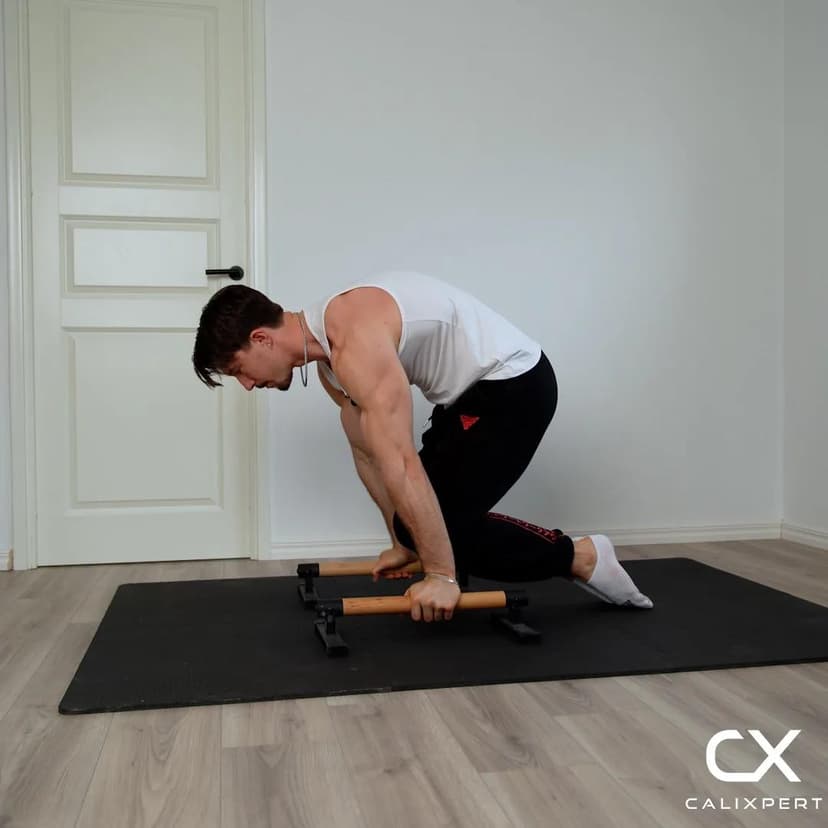
4. Lean Forward and Bend Your Elbows
Slowly bend your elbows and shift your center of mass forward over your hands. Lean as far forward as you feel comfortable and controlled. Your gaze should be slightly ahead of your fingertips, not straight down, to help maintain balance. The further you lean, the more weight transfers from your feet to your hands.
Lean forward slowly, eyes ahead
5. Lift Your Toes Off the Ground
Once you feel the majority of your weight on your hands, try to lift your toes slightly off the floor. Even a brief lift counts as progress. If you cannot hold the lifted position, simply lift and lower repeatedly to build the balance and strength needed for a sustained hold.
Light lift, even one second counts
6. Lower Back With Control
Shift your weight back toward your feet and gently lower your toes to the ground. Straighten your elbows and return to the starting squat position. Avoid dropping or collapsing out of the hold, as controlled exits build the same stabilizer strength as the hold itself.
Shift back slowly, do not collapse
Most people fail the frog stand lean because they try to lift their feet before they have actually committed to the forward lean. The feet come off the ground as a consequence of leaning far enough forward, not from actively pulling them up. Focus on pushing the floor away with your hands and letting your weight creep forward until the toes just become light, and the lift will happen on its own.
Muscles Worked During Lean Into Frog Stand
Primary Muscles:
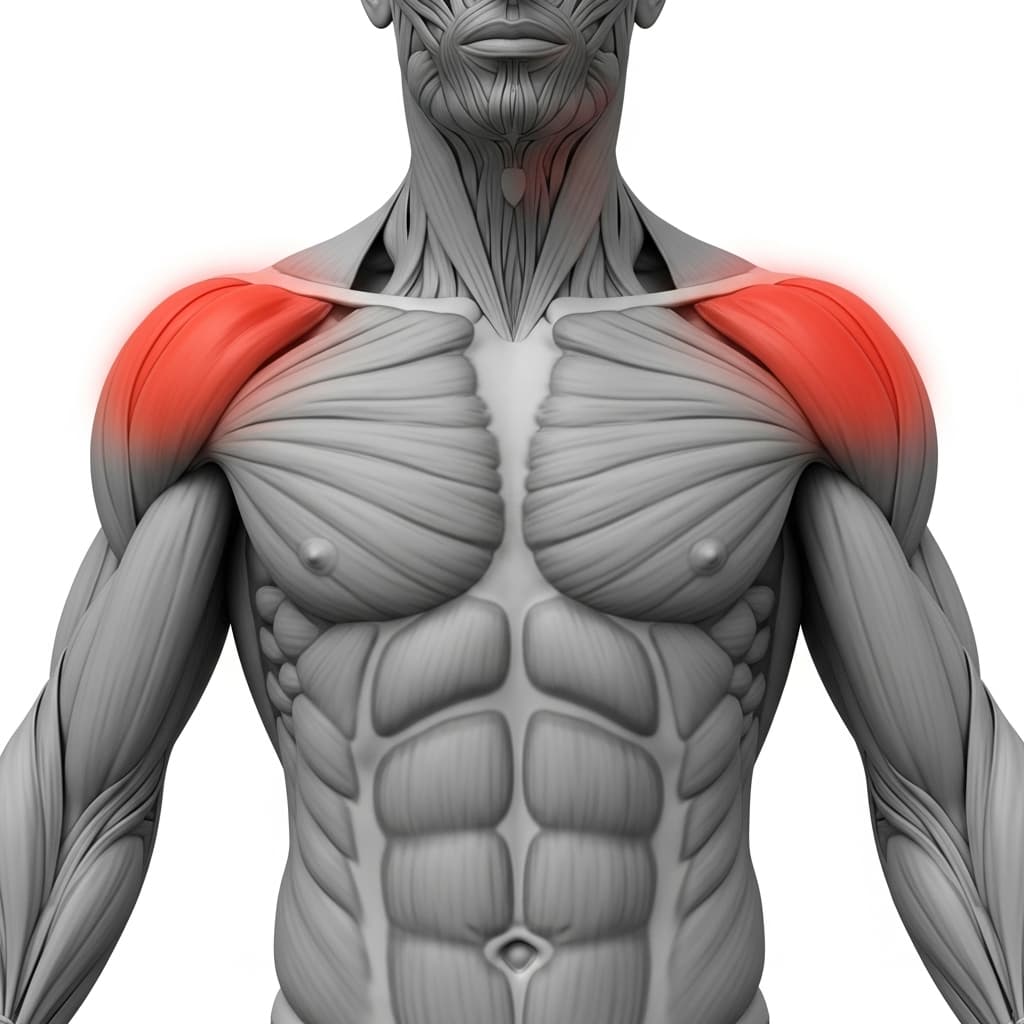
Secondary Muscles:
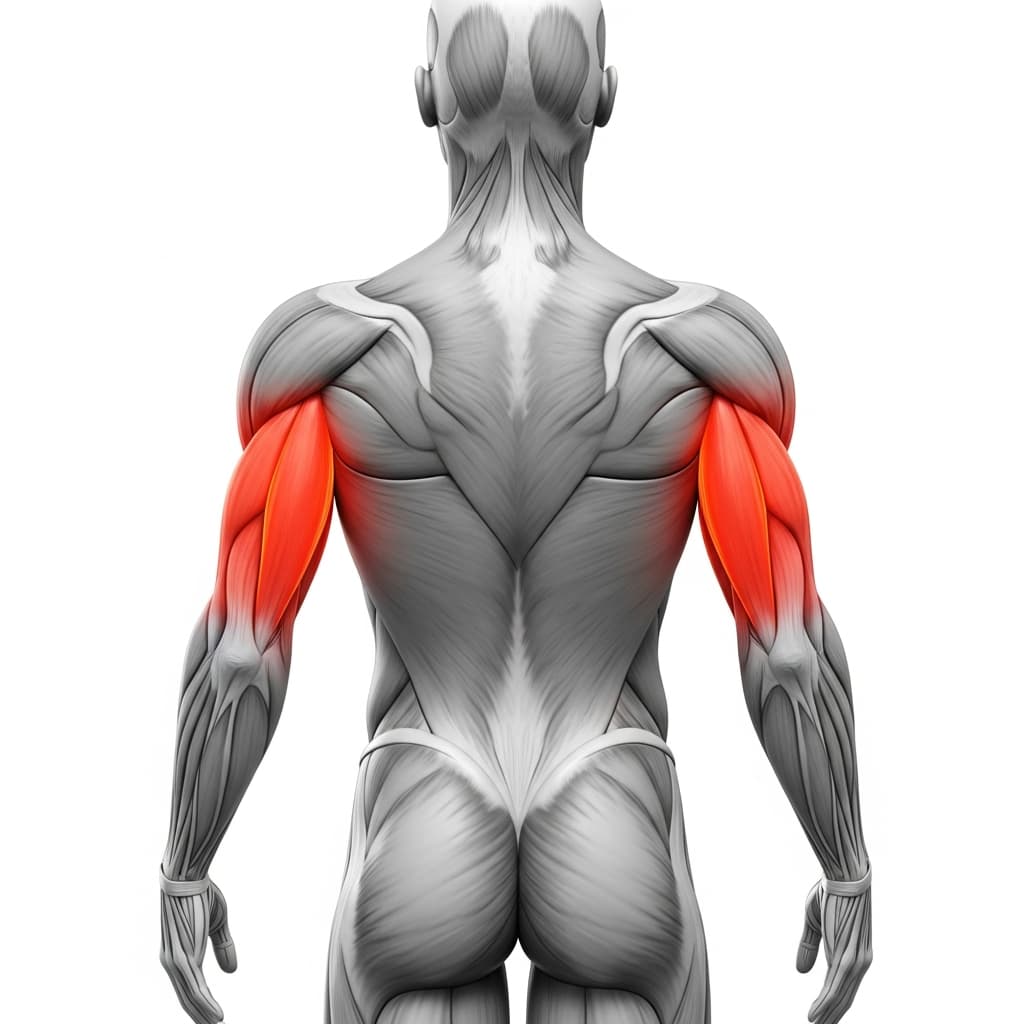
Primary Muscles
Anterior Deltoid (Front Deltoid) - Bears the majority of bodyweight as the torso leans forward, stabilizing the shoulder joint under increasing load throughout the hold.
Secondary Muscles
Triceps Brachii (Triceps) - Controls elbow flexion during the bent arm variation, preventing the arms from collapsing as bodyweight shifts onto the hands.
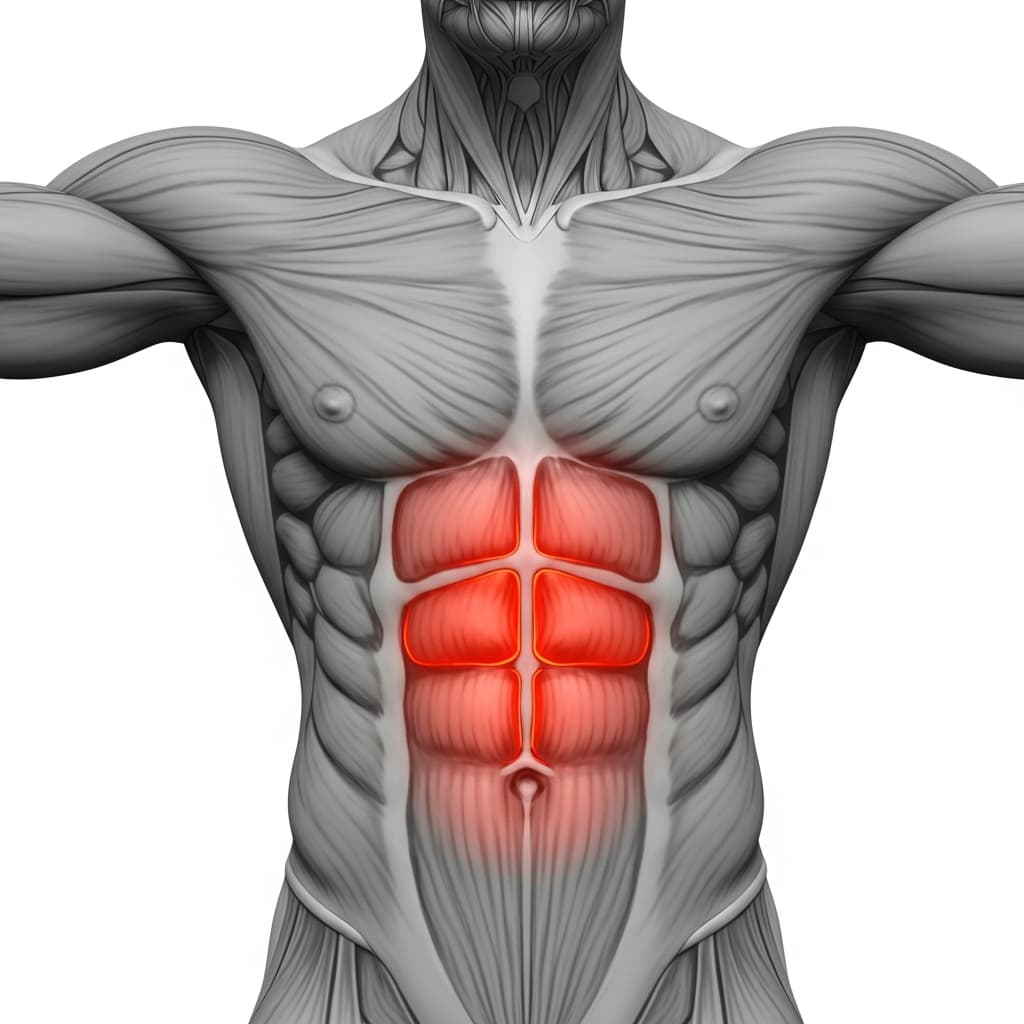
Rectus Abdominis (Abs) - Stabilizes the pelvis and torso to maintain a balanced center of gravity, preventing the hips from rotating or tipping sideways.
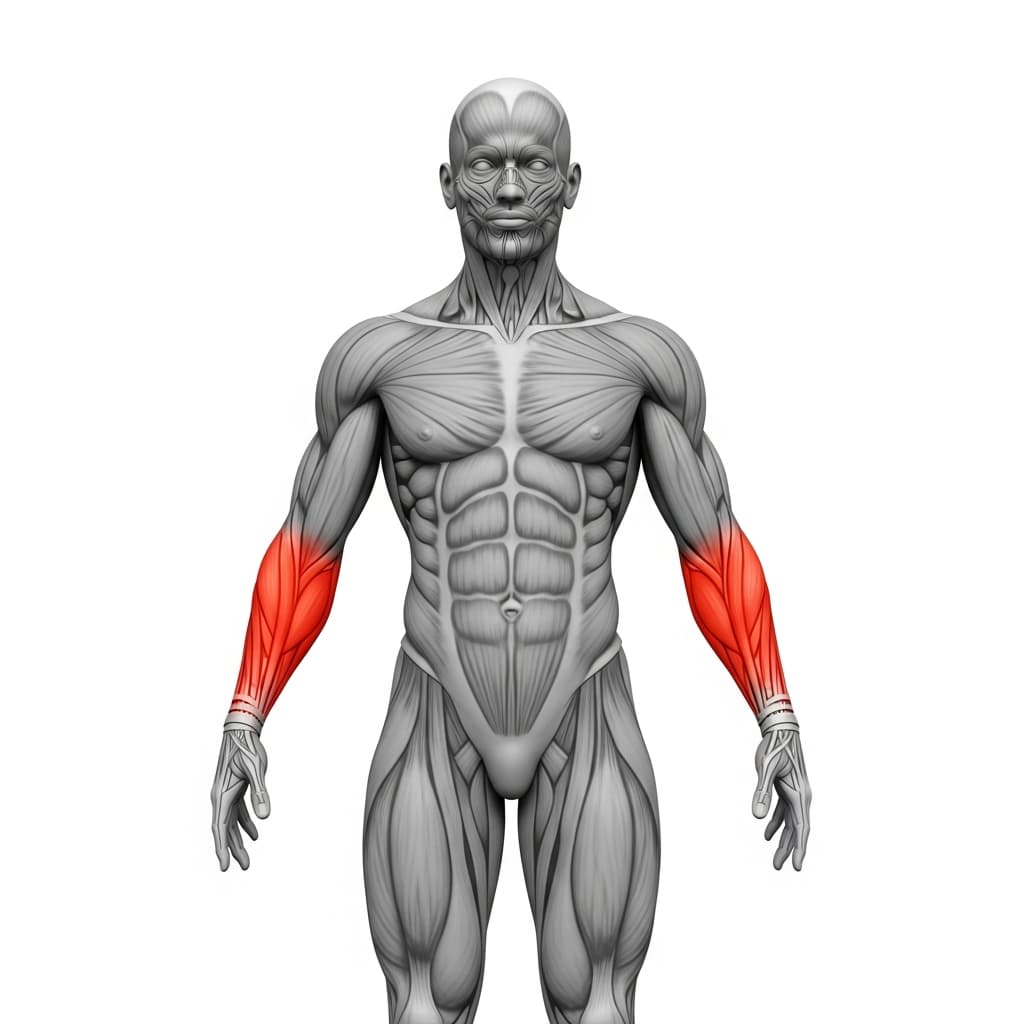
Forearm Flexors & Extensors (Forearms) - Maintains wrist stability and generates the fine grip adjustments through the fingers and palm that keep the body balanced during the forward lean.
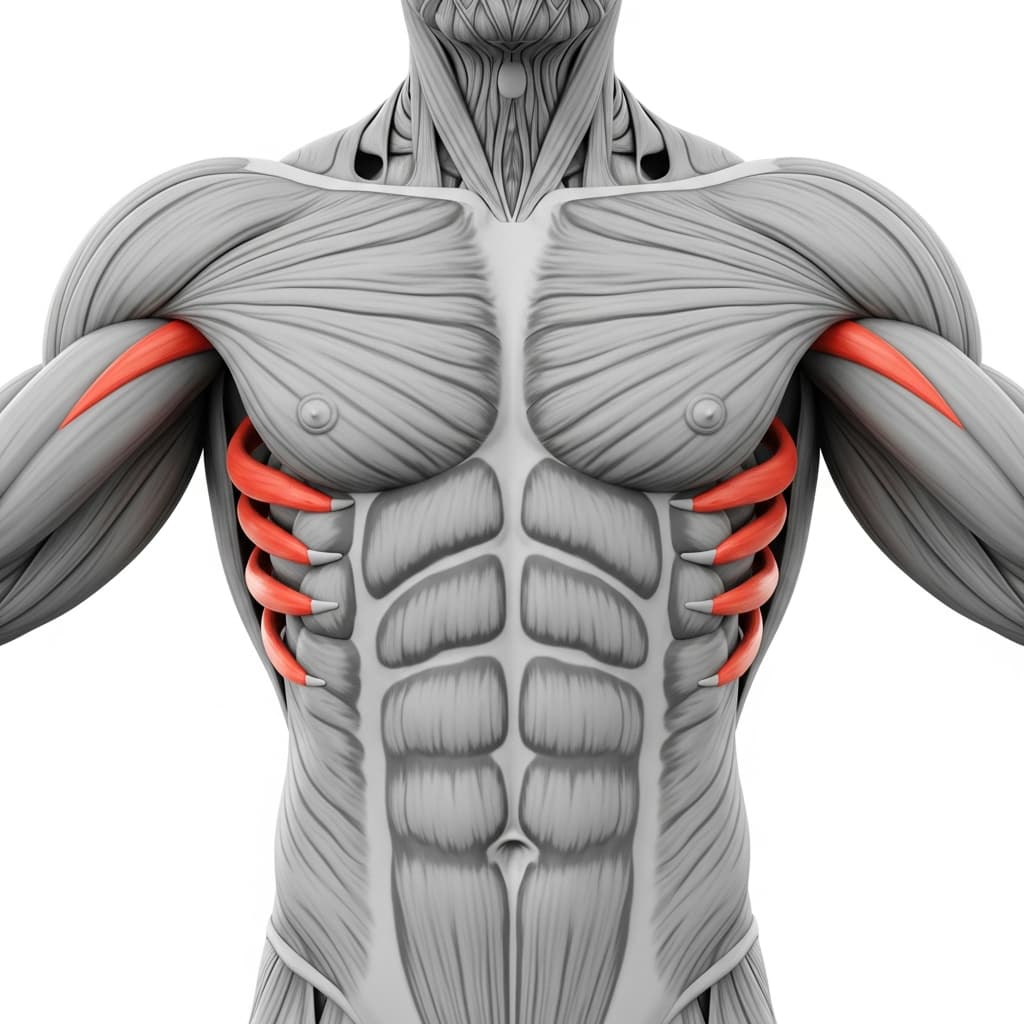
Serratus Anterior (Serratus Anterior) - Protracts the scapulae to create a stable shoulder platform, preventing the chest from sinking between the arms under load.
Benefits of Lean Into Frog Stand
- Builds wrist strength and conditioning under load, which is the single most important prerequisite for handstands, planche work, and all hand-balancing progressions
- Develops forward lean confidence and teaches the shoulder angle needed for crow pose and tuck planche transitions
- Strengthens the anterior deltoids in a loaded, stabilizing role that transfers directly to pressing movements like handstand push-ups
- Improves proprioception and balance on the hands, training the fine motor adjustments in the fingers and palms that keep you from tipping over
Who Is This Exercise For?
You should be able to hold a comfortable squat with your heels down and support yourself in a tabletop position on your hands for at least 20 seconds without wrist pain. If holding bodyweight on your hands causes sharp discomfort in the wrists, spend time on wrist stretches and gradually loaded wrist conditioning before attempting this drill. Familiarity with the basic squat position and some experience with hands-on-floor movements like bear crawls or plank holds will make the transition smoother.
Common Mistakes to Avoid
Placing hands too narrow: Keep your hands at least shoulder width apart with fingers spread. A narrow base makes the forward lean unstable and places excessive strain on the wrists because there is not enough lateral support to catch shifts in balance.
Looking straight down at the floor: Direct your gaze slightly forward, about 15 to 20 centimeters ahead of your fingertips. Looking straight down shifts your center of gravity too far forward and makes it much harder to find the balance point.
Jumping into the lean instead of shifting gradually: The lean must be a slow, controlled weight shift, not a hop or a lunge. Jumping forward bypasses the balance work entirely and often results in tipping over onto your face.
Letting the elbows flare wide: Keep your elbows tracking roughly over your wrists as you bend them. When the elbows flare outward, the knees lose their shelf on the arms and the position becomes unstable.
Ignoring wrist preparation: Warm up your wrists with circles and gentle loaded stretches before every session. Cold wrists under full bodyweight load lead to pain and potential strain that can set you back weeks.
Variations & Progressions
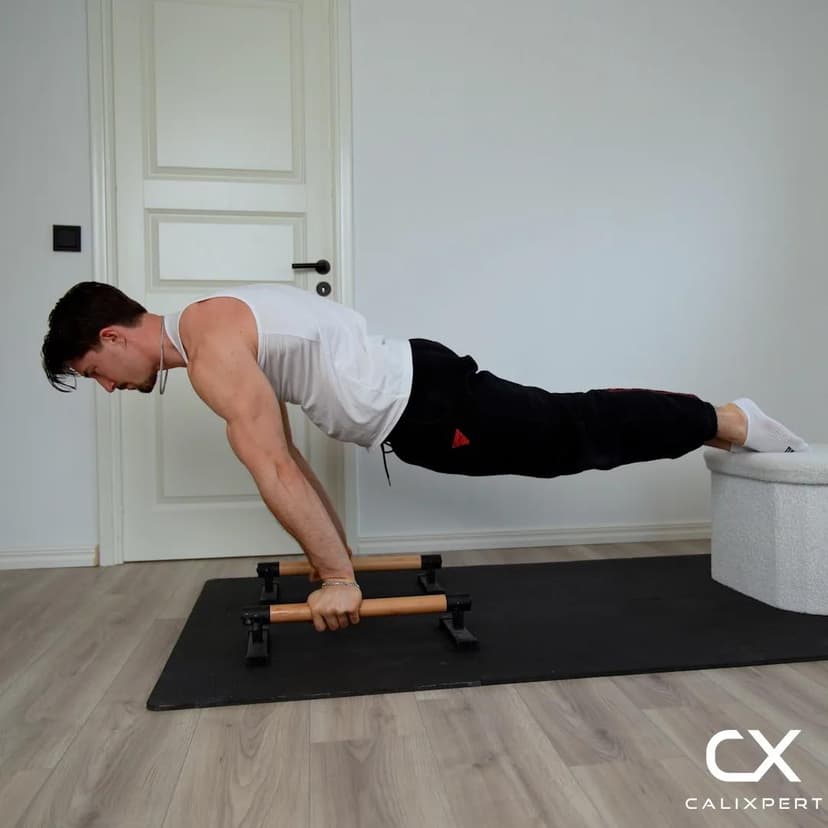
Partial forward lean without foot lift
Perform the full setup and lean forward, but keep your toes on the ground the entire time. This builds wrist conditioning and shoulder stability without the balance demand of a full lift.